

by Natasha Sol, Certified Quantum Biofeedback Practitioner
12-minute Read
Key points in this article:
Why You Feel Wired but Tired
5 Signs of Nervous System Dysregulation
7 Simple Ways to Regulate Your Nervous System
How to Support the Vagus Nerve
Energy Alchemy for Nervous System Support
Quantum Biofeedback & HRV Testing
How to Start Supporting Your Body Today
Wired but Tired? How Stress, Nervous System Dysregulation, and the Body’s Terrain Can Affect Your Vitality
A Case Study: When “Tired” Isn’t Just Tired
Kathy came to me with a long list of chronic complaints.
After 20 years of marriage, she had gone through a divorce three years before she came to see me. She had also moved from another state to be closer to her elderly mother and was in the process of selling her mother’s house.
As she sat across from me, with her shoulders hunched, her fatigue seemed to weigh on her body like a heavy backpack.
“Do you have trouble falling or staying asleep at night?”
She let out a deep sigh.
“Always. It takes me a while to wind down. I usually don’t go to sleep until midnight.”
“And how do you feel in the morning?”
She exhaled an exasperated huff.
“Tired. Drained. Not rested.”
“Hmmm, what about your digestion?”
“Oh, I always have to be really careful about what I eat. I’m constantly bloated,” she said emphatically.
“And how do you feel emotionally?”
Kathy slumped further into the chair and sighed again.
“I’m too tired to care about anything, but at the same time, everything irritates me.”
Persistent fatigue. Poor sleep. Digestive problems. Irritability. Feeling constantly on edge. Along with migraines and chronic constipation, Kathy’s story is a familiar picture of nervous system dysregulation - what many people describe as feeling “wired but tired. This is a state in which the body feels exhausted, yet the nervous system seems unable to fully settle.
Stress, Overload & Burnout
Modern life places an enormous demand on the human nervous system.
Financial pressure, work, relationships, caregiving, major life transitions, poor sleep, chronic pain, and concerns about physical health can all contribute to our overall stress load.
And sometimes, the biggest stressor isn't one dramatic event. It is the accumulation of dozens of smaller demands that never seem to turn off.
Current surveys consistently show that stress is widespread. People commonly identify the cost of living, finances, the economy, work, and personal health as significant sources of stress.
We may not be able to control the economy, inflation, workplace demands, or every difficult circumstance in our lives.
But we can influence how we care for our bodies and how we respond to stress.
That is where the nervous system becomes an important part of the conversation.
5 Signs Your Nervous System May Be Under Stress
These experiences aren't a diagnosis of nervous system dysfunction, but they can be useful signals that your body may need more support:
Chronic sleep issues
Difficulty falling asleep, staying asleep, or waking feeling refreshed.Persistent fatigue
Feeling depleted even after getting what should be adequate rest.Feeling constantly “on edge”
A sense of anxiety, tension, hypervigilance, or difficulty relaxing.Irritability and reactivity
Becoming easily frustrated or having stronger emotional reactions than usual.Physical tension and digestive discomfort
Clenched jaws, tight shoulders, a stiff neck, bloating, constipation, or other digestive complaints.
When these signals persist, it may be worth looking beyond the individual symptom and considering the bigger picture.
When the Nervous System Gets Stuck in Stress Mode
Fight, Flight, Freeze, or Fawn: The Stress Response Loop
The mind and body are deeply interconnected.
When we experience a significant physical or emotional stressor—a car accident, divorce, loss of a loved one, illness, financial crisis, or prolonged period of overwhelm—the nervous system responds.
Sometimes that response resolves naturally once the threat has passed.
Other times, especially when stress is prolonged or repeated, the body can continue operating as though it needs to remain prepared for danger.
This can affect sleep, muscle tension, digestion, mood, pain perception, energy, and our ability to recover from everyday stress.
We aren't always consciously aware of how much stress we're carrying.
The body can continue responding to an experience long after the mind believes it has moved on.
The Brain-Body Feedback Loop
One way to understand this process is:
An event occurs → the brain interprets the event → an emotional response develops → the body responds → we notice physical sensations → those sensations can reinforce the brain's perception of threat.
Over time, this can create a feedback loop.
In my book, I describe this as a Cause-Reaction Feedback Loop: an initial experience creates a pattern of reaction, and the pattern can continue to influence our thoughts, emotions, behaviors, and physical experience long after the original event.
This is one reason I believe that addressing only the symptom may not always be enough.
We also need to consider the terrain in which the symptom is occurring.
Nervous System Dysregulation & the Body’s Terrain
When the body remains under prolonged stress, multiple systems are involved.
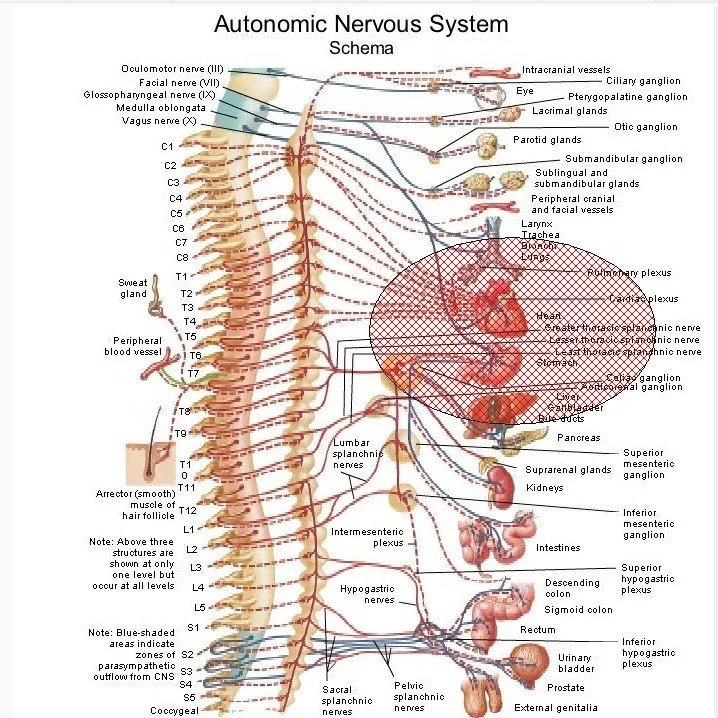
The autonomic nervous system interacts with the endocrine, immune, digestive, and cardiovascular systems. Chronic stress can influence sleep, inflammation, metabolism, digestion, pain sensitivity, and recovery.
This highlights an important principle:
The body's ability to adapt and recover matters.
When pain, poor sleep, digestive problems, fatigue, and chronic stress begin feeding one another, it can become increasingly difficult to restore balance.
That is why I focus on supporting the terrain of the nervous system and the body as a whole, rather than simply chasing individual symptoms.
Support the Terrain of the Nervous System
The goal isn't to eliminate every stressor from your life.
That's impossible.
The goal is to give your nervous system more opportunities to move out of chronic stress and into states associated with rest, recovery, digestion, connection, and repair.
And some of the most powerful practices are also remarkably simple.
7 Simple Ways to Lower Stress & Support Nervous System Regulation
1. Get Natural Light
The human body needs sunlight.
Early morning and evening light can help support your body's circadian rhythms and sleep-wake cycle.
Whenever possible, spend time outdoors and expose your eyes to natural daylight without staring directly at the sun.
A morning walk can provide two benefits at once: natural light exposure and gentle movement.
2. Connect With the Earth
Kick off your shoes and go barefoot! We are electrical beings and it’s essential for us to ground our energy. Slow down, reconnect with nature, and become more aware of your body.
3. Practice Slow, Intentional Breathing
Breathing is one of the simplest ways to bring your attention back into your body.
Place one hand on your chest and the other on your abdomen.
Slow your breathing down. Allow your abdomen to gently expand as you inhale and soften as you exhale.
The goal isn't to force a particular breathing pattern. It is simply to create a slower, more intentional rhythm.
4. Move Gently
You don't always need an intense workout.
Walking, stretching, yoga, Qigong, and gentle somatic movement can help you reconnect with your body while providing an opportunity to release physical tension.
The best movement is the movement you can do consistently.
5. Hum, Sing, or Gargle
Humming, singing, chanting, and gargling involve controlled breathing and vocalization and can be incorporated into a calming daily ritual.
Try humming gently for a few minutes while paying attention to the vibration and your breathing.
6. Use Temperature as a Reset
A brief splash of cool water on the face can be a simple sensory practice.
You don't need extreme cold exposure to create a moment of awareness and reset.
7. Release Neck and Shoulder Tension
Stress often shows up physically in the jaw, neck, shoulders, and upper back.
Try gentle neck stretches, slow shoulder rolls, chest opening, and conscious relaxation of the jaw.
Move slowly rather than forcing a stretch.
Vagus Nerve: Your Body’s Rest-and-Digest Response
The vagus nerve is a major component of the parasympathetic nervous system and plays an important role in communication between the brain and body.
Rather than thinking about “activating the vagus nerve” as a magic switch, think about creating conditions that support your body's ability to shift toward rest and recovery.
Breathing, vocalization, gentle movement, relaxation practices, and adequate sleep can all become part of that process.
The objective isn't to force your nervous system into a particular state.
It is to repeatedly give your body experiences of safety, relaxation, and recovery.
My Personal Experience & Clinical Approach
My own health journey profoundly influenced the way I approach wellness.
There was a time when I experienced what I understood as nervous system and adrenal burnout. Through changes in diet, exercise, and mindful living, I began rebuilding my health and developing a deeper understanding of the connection between lifestyle, stress, and the body.
That experience became the foundation for much of the work I do today.
It also inspired me to explore approaches that look beyond symptoms and consider the whole person.
The Energy Alchemy & Quantum Biofeedback Approach
My approach combines lifestyle practices with complementary modalities designed to support relaxation, self-awareness, and the body's ability to return to balance.
Healing Trauma Through Energy Alchemy
We begin with practices intended to help the client slow down, reconnect with the body, and create a greater sense of relaxation.
Breathwork
We use breathwork to promote relaxation, body awareness, and a sense of energetic flow.
Energy Intuitive Work
I use my skill as an Energy Intuitive to explore the client's subjective experience of where stress, emotion, or trauma may be held in the body.
ThetaHealing®
Within the ThetaHealing® framework, we explore subconscious beliefs, emotional patterns, and experiences that may be contributing to recurring patterns of stress or anxiety.
The intention is to help clients identify and work with patterns that may keep them feeling stuck.
Somatic Healing, Reiki & Acutonics
Somatic practices, Reiki, and Acutonics with tuning forks are incorporated to encourage relaxation, body awareness, and a sense of energetic balance.
Restore Balance After Stress
After releasing or processing difficult experiences, I believe it is equally important to focus on restoration.
This may include:
Chakra Balancing
A practice intended to promote a subjective sense of energetic balance and harmony.
Flower Essences
Flower essences can be incorporated as part of a personal wellness ritual.
Some remedies I frequently use include:
Star of Bethlehem - traditionally associated with shock, grief, and emotional trauma.
Bleeding Heart - traditionally associated with heartbreak, loss, and grief.
Yarrow - traditionally associated with sensitivity, energetic boundaries, and feeling depleted after difficult experiences.
Grief Relief - one of my favorite blends to use with clients working through grief and emotional transitions.
Grounding With Reiki
I then incorporate Reiki as a grounding and relaxation tool to help the client transition from processing into restoration.
Quantum Biofeedback for Nervous System Support
Another component of my practice is Quantum Biofeedback.
Beginning With HRV Testing
Heart Rate Variability (HRV) refers to natural variation in the time between heartbeats. HRV is commonly used as a non-invasive measure related to autonomic nervous system activity and recovery.
In my practice, the Nerve Xpress system is used to gather HRV-related information that can help us observe patterns over time.
What We Look At:
Depending on the system and assessment being used, HRV-related information can provide insight into:
Autonomic nervous system activity
Stress and recovery patterns
Adaptability to stress
Changes over time
The goal isn't to reduce a complex human being to a number.
Instead, measurements can provide another piece of information that we can consider alongside the client's symptoms, lifestyle, experiences, and goals.
Supporting the Body With Frequencies
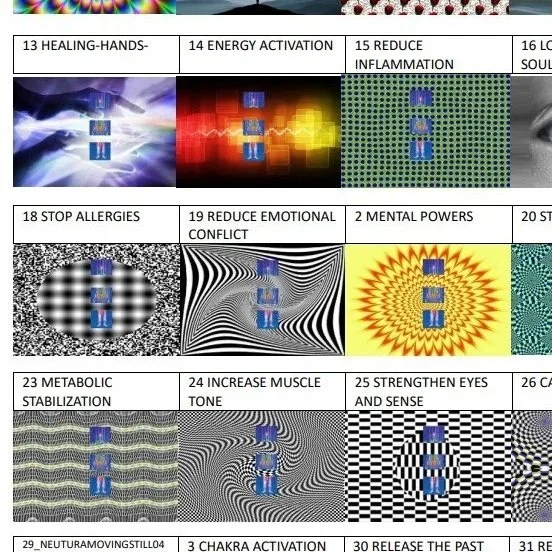
Following assessment, we may use biofeedback programs designed around specific wellness goals.
These may include:
Trauma Support - Neuro-Linguistic Programing
NLP-based techniques may be incorporated to explore thought patterns, emotional responses, and beliefs associated with stressful experiences.
Vagus Nerve Support - Iridology Panel
The Iridology panel is incorporated within my complementary wellness approach to explore patterns that I associate with nervous system support.
Emotional Stress Support - BIG: Biofeedback Interfaced Graphics
The BIG, Biofeedback Interfaced Graphics program, may be used as part of a stress-management and relaxation protocol.
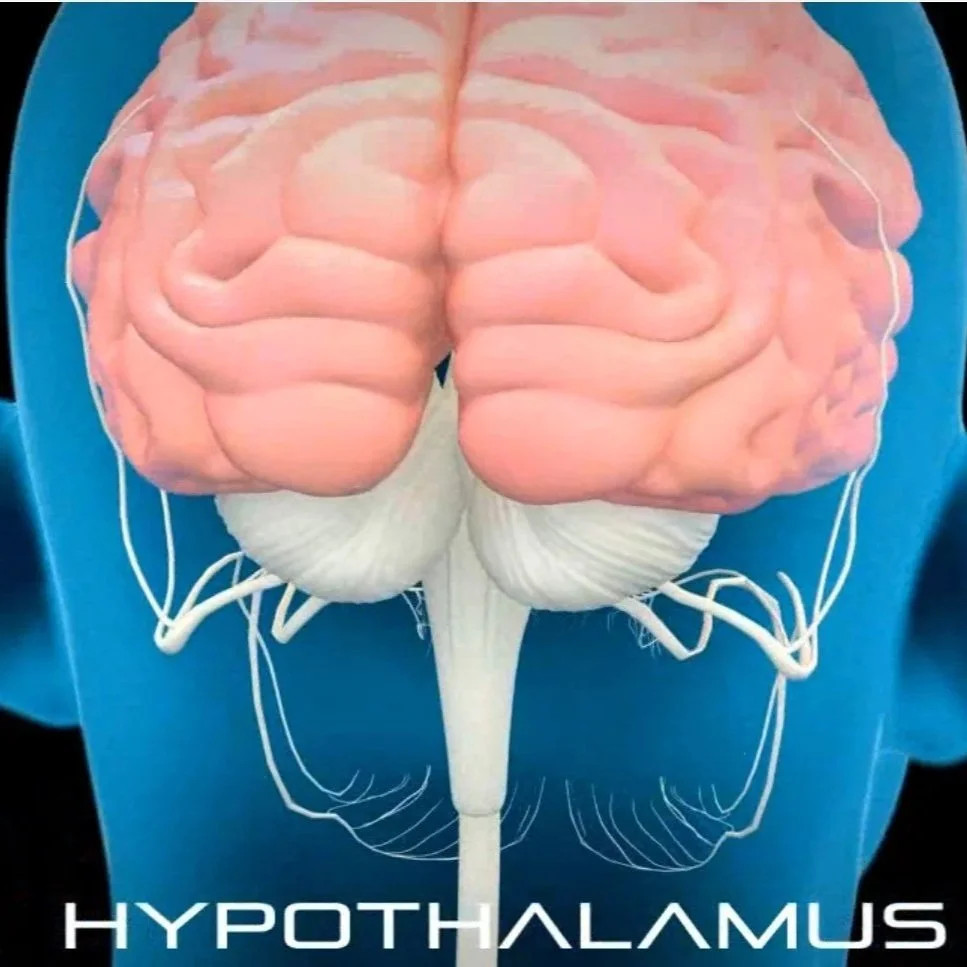
Hypothalamus & Limbic System Support - Body Viewer
The limbic system and hypothalamus are important components of the brain-body connection.
The hypothalamus helps regulate functions including body temperature, hunger, thirst, sleep, and hormone signaling.
The limbic system is involved in emotion, memory, motivation, and the body's response to stress.
Within my approach, the Body Viewer is used as a complementary biofeedback tool to support relaxation and nervous system-focused wellness work.
Simple Steps You Can Start Today
You don't have to completely change your life to begin supporting your nervous system.
Start small.
Go outside and spend some time in the sunlight.
Take a slow walk.
Breathe intentionally.
Stretch your neck and shoulders.
Spend a few minutes in quiet reflection.
Hum or sing.
Put your bare feet on the ground.
Create a consistent bedtime routine.
Choose nourishing, organic fruits and veggies.
Give your body time to rest.
These practices are simple, accessible, and generally low-cost. More importantly, they can become part of a sustainable daily health routine rather than another complicated wellness program.
And that's the point.
You don’t have to do everything at once!
Choose one practice that feels realistic and repeat it. Consistency is key!
Over time, these small signals of safety, rest, movement, connection, and nourishment can become part of the foundation upon which greater resilience and vitality are built.
Build Your Health Stack From the Ground Up
Healing and supporting the body's terrain and nervous system takes time.
There are no magic switches and no single technique that works for everyone.
Quick fixes may provide temporary relief, but lasting wellness is usually built through consistent, healthy choices repeated over time.
Your nervous system is constantly receiving information from your environment, your thoughts, your relationships, your movement, your nutrition, your sleep, and your daily experiences.
The question isn't:
“How can I eliminate all of my stress?”
The better question is:
“How can I give my body more of what it needs to adapt, recover, and thrive?”
That is where your health stack begins.
Start with the basics.
Support your sleep.
Move your body.
Get natural light.
Breathe.
Nourish yourself.
Create moments of calm.
Process what you've been carrying.
True longevity and quality wellness care aren't built on shortcuts. They're built through consistent investment in the health of your whole self—body, mind, spirit, and the nervous system.